The American Association of Orthodontists recommends that every child have an orthodontic checkup by age 7. That surprises a lot of parents, since most 7-year-olds still have plenty of baby teeth. But that’s exactly why the timing works. By about age 7, the first permanent molars and front teeth have usually come in, and an orthodontist can see how the bite and jaws are developing while there’s still time to guide them.
An early visit doesn’t mean early braces. Most children we see at this age don’t need treatment yet. The point is to know what’s coming.
What an Orthodontist Looks for at Age 7
At an early evaluation, Dr. VandeBerg or Dr. Bingham checks how your child’s teeth, jaws and bite are growing. That includes:
- Whether there will be enough room for the permanent teeth that haven’t come in yet
- Crossbites, where upper teeth sit inside the lower teeth
- Overbites, underbites and open bites
- Whether the upper and lower jaws are growing in balance
- Habits like thumb or finger sucking that can affect how teeth and jaws develop
- Breathing patterns, since mouth breathing and snoring can be connected to how the jaws grow
Signs Your Child Should Be Seen Sooner
You don’t have to wait for a birthday. Call us if you notice any of these:
- Baby teeth falling out very early or very late
- Crowded, crooked or blocked-out front teeth
- Trouble chewing or biting
- Teeth that don’t meet, or meet in an unusual way
- Jaws that shift or make sounds
- Thumb sucking that continues past the preschool years
- Snoring or breathing through the mouth most of the time
- Biting the cheek or the roof of the mouth
Three Possible Outcomes of an Early Visit
After the exam, families usually leave with one of three answers.
Everything looks on track. We’ll tell you that, and you’ll have peace of mind.
Something is worth watching. This is the most common result. Your child comes back every so often so we can follow their growth and step in at the right moment, often when more permanent teeth have arrived. Our team will tell you when to come back.
Early treatment would help. Some problems are easier to correct while a child is still growing. A narrow upper jaw is a good example. A palate expander can widen it before the bones fully mature, which makes room for incoming teeth and can correct a crossbite. Treating certain issues early can make later treatment shorter or simpler.
What Is Phase I Treatment?
Phase I, sometimes called interceptive treatment, is a short round of treatment done while a child still has some baby teeth. It’s aimed at a specific problem, like jaw width, a crossbite or protruding front teeth that are at risk of injury. It isn’t a substitute for braces later. Many children who have Phase I still need a second phase once all their permanent teeth are in, but that second phase is often more straightforward.
Not every child needs Phase I, and we won’t recommend it unless there’s a clear reason. If watching and waiting is the better choice, we’ll say so.
Airway and Breathing
Snoring, mouth breathing and restless sleep in kids sometimes go hand in hand with a narrow upper jaw. If we notice signs like these, we’ll talk with you about it and let you know if it makes sense to involve your child’s pediatrician or another specialist. You can read more on our airway orthodontics page.
What Happens at the First Visit
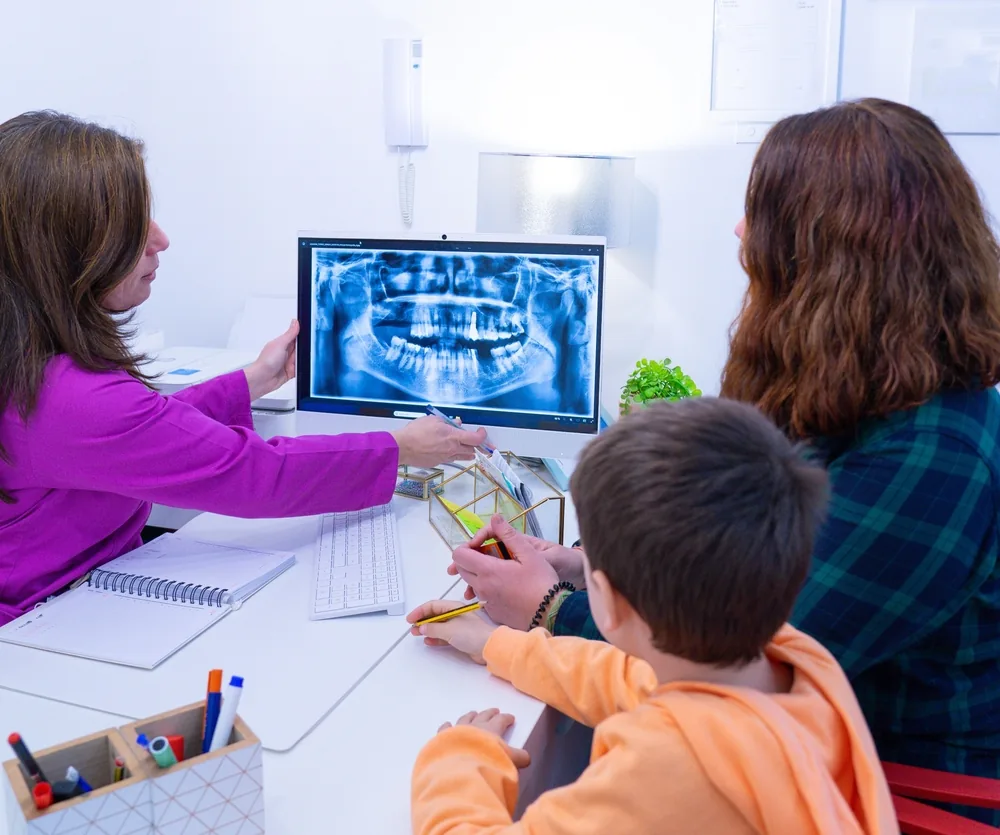
Your child’s first visit is a free consultation. Our team takes photos and the images the doctor needs, the doctor does a gentle exam, and then we sit down with you to explain what we see in plain language. You’ll know whether your child needs treatment now, later or not at all, and you’ll have time to ask questions. Learn more on our getting started page.
Frequently Asked Questions
Is age 7 too young for braces?
Usually, yes. The age 7 visit is a checkup, not a start date for braces. Most kids who need full treatment begin later, once more permanent teeth are in.
Our dentist hasn’t mentioned orthodontics. Should we still come in?
Yes. Your family dentist focuses on the health of the teeth. An orthodontist focuses on how the teeth, jaws and bite develop. The two work together, and a referral isn’t required to schedule.
What if my child is older than 7?
It’s never too late for a first visit. We see kids and teens of every age. Visit our kids and teens pages to learn more.
Schedule Your Child’s Free Early Evaluation
We see children at our Centennial and Aurora offices. Call our new patient line at 303-690-2200 or request your free consultation online.