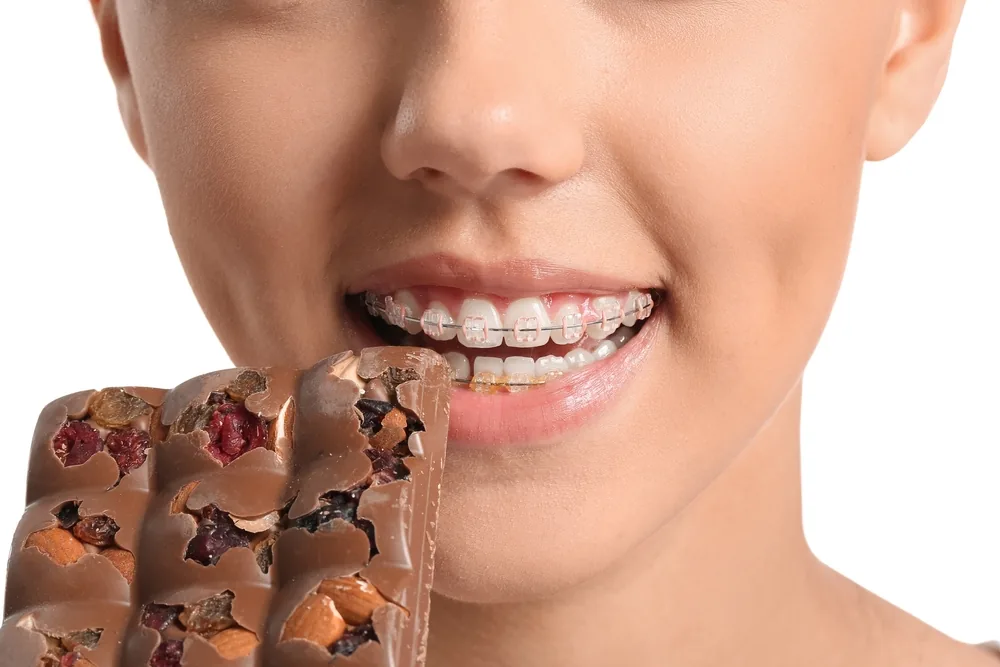

Braces and clear aligners can both straighten teeth and fix bite problems. The better choice depends on your teeth, your bite and how you live day to day. Here’s an honest look at how they compare, so you can come to your consultation with good questions.
How Braces Work
Braces use small brackets bonded to the teeth and a wire that connects them. At each visit, the doctor adjusts the wire to guide your teeth step by step. We offer two styles:
- Metal braces, the most time-tested option, strong and efficient for nearly any case
- Clear braces, which work the same way but use tooth-colored brackets that blend in
Because braces stay on all the time, they keep working whether or not anyone remembers to wear them. That makes them a reliable choice for younger patients and for more complex bite corrections.
How Clear Aligners Work
Clear aligners are a series of thin, custom trays that move your teeth a little at a time. Our practice offers clear aligners. We start with a digital scan of your teeth, plan each stage of movement, and you switch to a new set of aligners on a schedule the doctor sets. Small tooth-colored bumps called attachments are often added to certain teeth to help the aligners grip and move them.
Aligners are removable, so you take them out to eat and to brush. The tradeoff is that they only work while they’re in. Most patients need to wear them about 20 to 22 hours a day. Learn more on our clear aligners page.
Side by Side
Appearance
Aligners are the least noticeable. Clear braces are a close second. Metal braces are the most visible, though many kids and teens enjoy picking colored bands.
Eating
With aligners, you remove them and eat whatever you like, then brush before putting them back in. With braces, you’ll avoid hard, sticky and chewy foods that can break a bracket. Our guide to foods to avoid with braces covers the details.
Cleaning
Aligners make brushing and flossing easier since nothing is attached except small attachments. Braces take more effort, with floss threaders or a water flosser to clean around brackets.
Responsibility
This is the biggest difference. Braces work around the clock without any decisions from the patient. Aligners depend on wearing them as directed. If they spend too much time in a case or a backpack, treatment can stall.
Comfort
Both cause some pressure and soreness for a few days after an adjustment or a new set of aligners. Braces can rub the cheeks at first, which orthodontic wax helps with. Aligners have smooth edges.
Visits
Braces need regular adjustment appointments. Aligner patients still come in for progress checks so the doctor can make sure teeth are tracking as planned.
Who Tends to Do Well With Each
Aligners are often a great fit for adults and responsible teens who want a discreet option and are ready to wear them consistently. Braces are often a strong fit for younger patients, for people who know they’d forget to wear aligners, and for certain complex movements. Today, aligners can treat many cases that once required braces, but not every case. The doctor will tell you honestly which option fits your bite.
Is One Faster or More Affordable?
Treatment time depends far more on what needs to be corrected than on which appliance you choose. The same is true for cost. We’ll walk you through your options at your consultation, check your insurance benefits for you and review flexible payment options.
Frequently Asked Questions
Can I switch from braces to aligners partway through?
Sometimes. It depends on the case and the stage of treatment. Ask the doctor at one of your visits.
Do I need a retainer with either option?
Yes. Teeth tend to drift after any orthodontic treatment, so everyone wears a retainer afterward. See our retainer care page.
Are aligners only for adults?
No. We offer clear aligners for teens and adults, and in some cases for younger children.
Find Out Which Option Fits You
The fastest way to know is a free consultation with Dr. VandeBerg or Dr. Bingham at our Centennial or Aurora office. Call our new patient line at 303-690-2200 or schedule online. For a deeper comparison, visit our aligners vs. braces page.