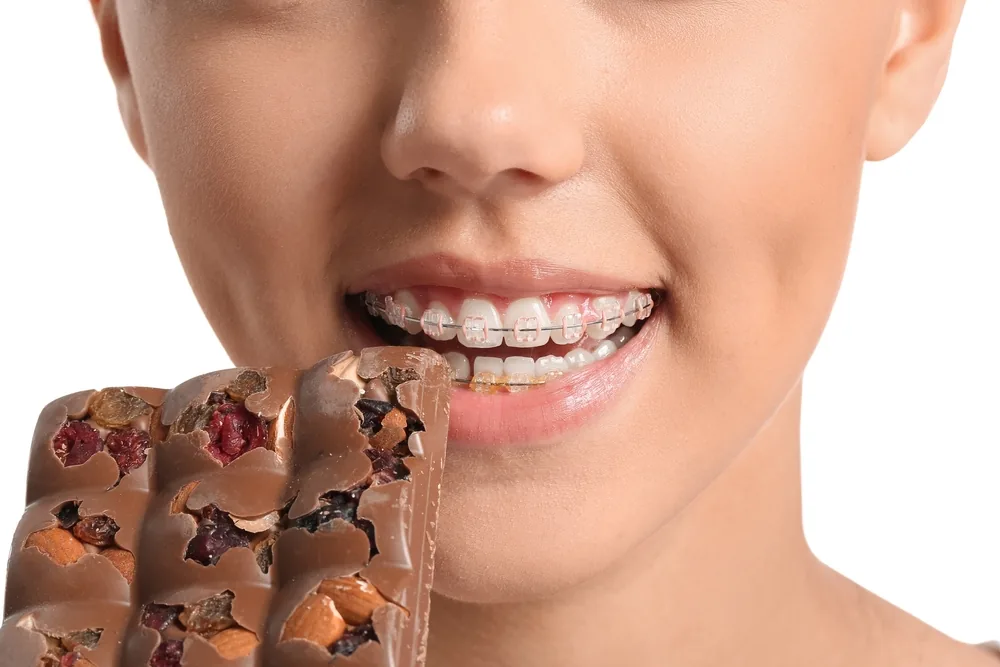

Brackets, wires and aligners all create new places for food and plaque to hide. If plaque stays on the teeth during treatment, it can leave white spots on the enamel or lead to cavities and swollen gums. Those white spots can last long after braces come off. A few minutes of extra care each day prevents nearly all of it.
Brushing With Braces
Brush after every meal if you can, and always before bed. Use a soft toothbrush and fluoride toothpaste.
- Rinse with water first to loosen food.
- Angle the brush toward the gumline and brush along it in small circles.
- Brush the top of each bracket, then angle down and brush the bottom of each bracket.
- Brush the chewing surfaces and the backs of the teeth, which are easy to skip.
- Take about two minutes. Check in the mirror for anything left behind.
An electric toothbrush can make this easier. A small interproximal brush, shaped like a tiny bottle brush, cleans under the wire and between brackets.
Flossing With Braces
Flossing is harder with braces, but it still matters. Plaque between the teeth and under the gums is where cavities and gum problems start. Pick the tool you’ll actually use:
- Floss threaders pull regular floss under the wire so you can floss each space.
- Orthodontic floss has a stiff end built in, so you don’t need a separate threader.
- A water flosser sprays a stream of water around brackets and along the gumline. Many patients find it the quickest option.
Once a day, ideally at night, is the goal.
Caring for Teeth With Clear Aligners
Aligners fit snugly, so anything left on your teeth gets held against them for hours. That makes clean teeth even more important.
- Brush and floss before putting your aligners back in after eating.
- Drink only plain water while wearing them.
- Rinse your aligners when you take them out, and clean them gently with a soft brush and cool water. Hot water can warp them.
- Keep them in their case when they’re out, never wrapped in a napkin.
Keep Seeing Your Family Dentist
Orthodontic visits don’t replace dental cleanings and checkups. Keep your regular visits with your family dentist during treatment. Your hygienist can clean areas that are hard to reach at home, and your dentist can catch problems early.
Watch for These Warning Signs
- Gums that bleed when you brush or look puffy around the brackets
- Chalky white areas on the teeth near the brackets
- Bad breath that doesn’t go away after brushing
Bleeding gums usually improve within a week or two of better brushing and flossing. If they don’t, or if you notice white spots, mention it at your next visit.
Tips for Parents
Kids and teens with braces usually need reminders, especially in the first few months. A few things that help:
- Pack a travel toothbrush in their backpack or sports bag.
- Do a quick “smile check” after brushing at night.
- Keep sugary drinks as an occasional treat, not an everyday habit.
- Ask at your child’s appointments how their brushing looks. We can point out the spots your child is missing.
Frequently Asked Questions
Should I use mouthwash?
A fluoride rinse can add extra protection for enamel during treatment. Ask the doctor or your dentist whether one makes sense for you.
Do I need to brush after every snack?
That’s ideal. If you can’t, rinse well with water and brush at your next chance.
Where can I find more instructions?
See our oral hygiene instructions and retainer care pages.
We’re Here to Help
Current patients can ask us about brushing and flossing at any visit. If you’re considering treatment, call our new patient line at 303-690-2200 or schedule a free consultation at our Centennial or Aurora office.